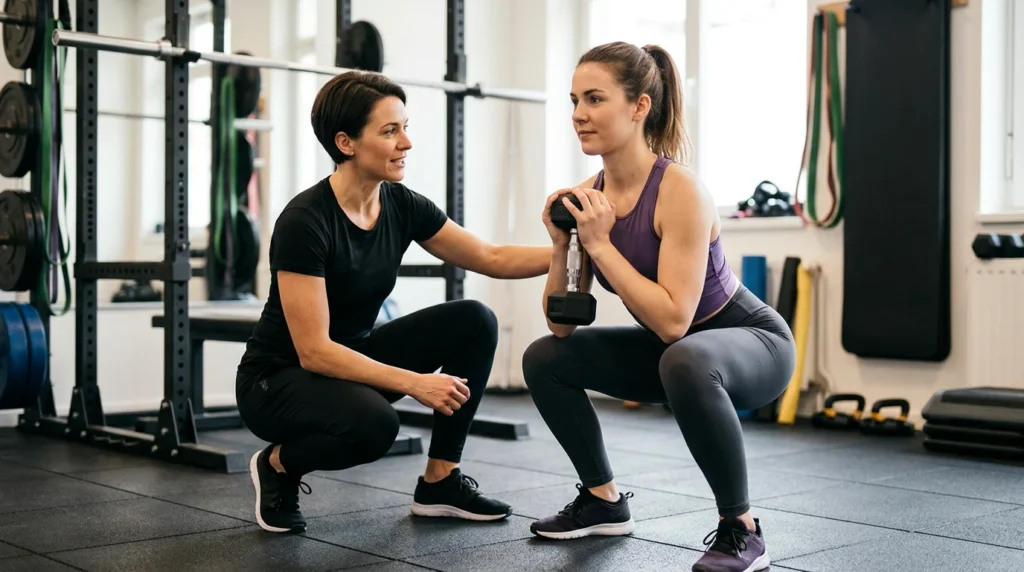
Quick answer: Private fitness coaching is worth it if you want a clear plan, accountability, and technique feedback tailored to your body, schedule, and goals. It can help you stop guessing in the gym, reduce injury risk from poor form, and make progress more consistent. If you’re self-motivated and already follow a structured program, you may need fewer sessions or occasional check-ins instead.
What You Actually Get From Private Coaching
Good private fitness coaching is more than someone counting reps. You’re paying for decision-making: which exercises fit your goal, how hard to push, what to change when progress stalls, and how to train around old injuries, tightness, or a stressful week.
Most people also benefit from real-time coaching on form and effort. Small adjustments—bracing, foot pressure, shoulder position, breathing—can make a lift feel safer and more effective immediately. You also get a plan that connects the dots: warm-up, main lifts, accessory work, cardio (if needed), and recovery habits that match your life.
Accountability is the other big piece. Having a session booked, and someone who notices patterns like skipping warm-ups or always stopping sets early, can be the difference between “busy week” and steady progress.
A Quick Self-Check: What Level of Coaching Fits You?
Use these questions to choose a level of support. Answer honestly based on the last 4–6 weeks, not your “ideal” routine.
1) Do you consistently train 2–4 times per week?
If no, weekly coaching can help you build a repeatable routine. If yes, you may only need technique help or check-ins.
2) Can you name your current program’s progression rule? (Example: add 1 rep each week until you hit the top of a range, then add weight.)
If no, weekly coaching or a short programming block is usually more useful than ad-hoc sessions.
3) Are you unsure about form on key lifts?
If yes, a short technique block (for example, a handful of sessions close together) can be a practical way to get feedback and drills, then transition to independent training.
4) Do you keep stalling, getting bored, or changing plans every 1–2 weeks?
If yes, weekly coaching or at least monthly check-ins can add structure and accountability.
5) Do you have pain that’s sharp, worsening, or affects daily life?
If yes, clinician input first (or alongside training) is the safer route. A coach can still adjust training, but persistent or severe symptoms deserve assessment.
Simple mapping: Weekly coaching fits beginners, restarters, and anyone needing structure and accountability. A short technique block fits people who train consistently but want form cleanup. Monthly check-ins fit disciplined trainees who mainly need programming tweaks and a sanity check.
How to Choose the Right Coach in East London
Look for a coach who asks detailed questions before prescribing anything: training history, injuries, sleep, stress, schedule, equipment access, and what you’ve tried. A good sign is someone who explains the “why” behind the plan and can offer options when a movement doesn’t suit you.
Pay attention to how they measure progress. Scale weight is only one tool; strength numbers, waist/hip measurements, photos (if you’re comfortable), performance markers, and how you feel day to day can matter more depending on your goal.
Practical fit matters too. Consistency beats perfection, so choose a location and session times you can keep for a typical 8–12 week training block if you’re aiming to build habits and track changes over time.
How KBPT Sessions Typically Work
Sessions commonly start with a consultation to clarify goals, training history, schedule, and any limitations. Early sessions often use a simple movement-screen approach (watching you squat, hinge, push, pull, brace, and move through comfortable ranges) to guide exercise selection and coaching cues.
Programming is usually set up in a repeating cadence (for example, a plan for the week with clear exercises, sets/reps, and progression notes), then adjusted based on how sessions feel and what you can recover from. Many coaches also build in regular check-ins—either in person or between sessions—to review training logs, energy levels, and adherence.
That structure can be delivered as weekly sessions, a short technique-focused block, or periodic reviews, depending on how much guidance you want and how independently you like to train.
What to Expect in Your First Few Sessions
Early sessions often focus on assessment through movement, not fancy tests. Expect coaching on basic patterns like squats/hinges, pushes/pulls, carries, and core bracing. Loads may start lighter than you expect so technique can be built and repeated safely.
Your plan should include progression rules you can follow between sessions: how to add reps or weight, how close to failure to train, and what to do on low-energy days. Nutrition advice may range from simple habits (protein at meals, planned snacks, hydration) to more structured tracking if that suits you.
If you’re in East London and want in-person coaching, consider booking a consultation with KBPT Personal Training East London to see if it’s a fit.