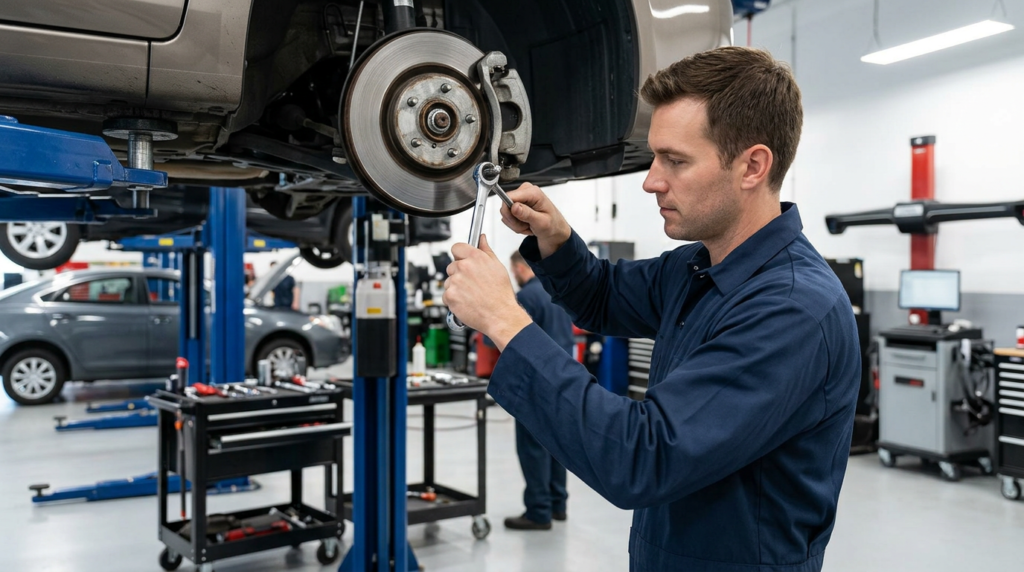
Quick answer: Choose a trustworthy auto repair shop by looking for clear communication, written estimates, and technicians who explain the cause of the problem—not just the part they want to replace. Ask how they verify the fix, what warranty they offer on parts and labor, and whether they’ll show you worn components. Compare at least two estimates line-by-line so you’re judging the same parts, labor scope, and warranty terms.
What to Look For Before You Book
Start with how the shop communicates. A reliable service advisor can describe symptoms in plain language, explain the likely causes, and outline the diagnostic steps before recommending repairs. You should be offered a written estimate that separates parts and labor, and you should be asked for approval before any additional work is done.
Pay attention to process details, not sales talk. Ask whether they road-test to confirm the complaint, scan for codes when the check-engine light is on, and re-check for leaks/noise after repairs. If you’re comparing options, look at how quickly a shop can fit you in and how they handle updates—text, call, or photos. If you’re searching specifically for an auto repair shop Suwanee GA, prioritize the one that gives you a clear plan for diagnosis instead of guessing.
A Simple Step-by-Step Way to Compare 2–3 Shops
Step 1: Make the same call to each shop. Use a short script: “My car is a [year/make/model]. Symptom: [what happens], started [when], happens [conditions]. Can you schedule a diagnostic? How do you bill diagnostic time, and will I get a written estimate before repairs?”
Step 2: Request the same documents. Ask for a written estimate that lists labor hours, labor rate (or total labor), part brand/grade (OEM, OEM-equivalent, aftermarket), shop supplies/fees, and warranty terms. If they recommend multiple items, ask them to separate “needs now” vs. “can monitor.”
Step 3: Compare apples-to-apples. Make sure each estimate covers the same scope. One shop may include related gaskets, fluids, or an alignment; another may not. Ask, “What’s included in this price?” and “What would increase the total?”
Step 4: Ask how they’ll confirm the fix. Examples: road test, scan data verification, leak check, or rechecking charging voltage after an alternator/battery repair. A shop that can describe the verification step is usually thinking beyond parts swapping.
Step 5: Decide based on clarity and process. Choose the shop that gives the most understandable plan, the cleanest written estimate, and a reasonable timeline—not the one that makes the biggest promises.
Suwanee/Georgia-Specific Verification Checklist
Use local context to sanity-check what you’re seeing. Look at reviews from Suwanee, Sugar Hill, and nearby Gwinnett County areas and scan for consistency: repeated mentions of good communication, honoring estimates, and resolving comebacks matter more than one glowing post. A steady pattern over time is more meaningful than a spike of reviews in a short window.
You can also do a quick legitimacy check: confirm the shop’s exact business name and address match across receipts, signage, and online listings, and look for obvious complaint patterns in public sources (for example, repeated disputes over unauthorized work or pricing surprises). If something feels off, ask who owns the vehicle while it’s in the bay and how keys and vehicles are secured.
Ask about Georgia emissions requirements if they apply to you. In the Atlanta metro area, some counties require emissions testing for registration; if your check-engine light is on, ask whether the repair plan is aimed at resolving the underlying fault and completing a proper drive cycle so readiness monitors can set before you retest. If emissions aren’t required where you register, you can still use that same conversation to judge how well the shop explains diagnostics.
Red Flags That Suggest You Should Walk Away
Be cautious if a shop won’t provide a written estimate, won’t explain why a repair is needed, or pressures you with vague statements like “you have to do this today” without showing evidence. Another red flag is replacing parts based only on a trouble code. A code points to a system, not always the exact failed part; proper diagnosis may include smoke testing for vacuum leaks, checking fuel-trim data, or verifying sensor readings.
Watch for inconsistency: a different story each time you ask, no clear timeline, or reluctance to return old parts when you request them. A messy parking lot isn’t proof of bad work, but a shop that can’t keep track of keys, appointments, or estimates often struggles with the details that matter on your car.
If you’re considering Team Ryan Automotive or any other nearby shop, contact the shop to ask these questions and request a written estimate.