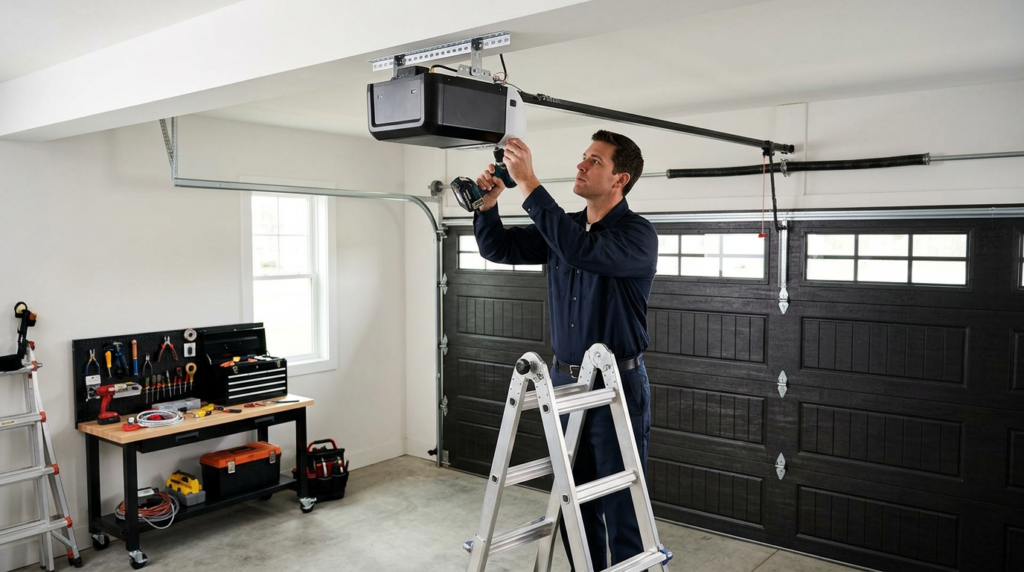
Quick answer: A pro is usually the safer choice for LiftMaster opener installation if you’re replacing an older unit, adding safety sensors and wiring, or mounting to a high or heavy door. Proper installation means the opener is matched to the door, the rail and header are anchored correctly, limits and force settings are tuned, and the safety reversal system is tested. DIY can work for simple swaps if you’re comfortable with electrical and mechanical setup.
What a Proper Installation Includes
A LiftMaster install is more than hanging a motor on the ceiling. The door has to be in good working order first—springs balanced, rollers and hinges moving freely, and the door staying at mid-travel when disconnected. If the door is binding or heavy, a new opener won’t fix it, and the extra strain can shorten the opener’s life.
The installation itself typically includes mounting the header bracket into solid framing, aligning and securing the rail, hanging the powerhead with appropriate angle iron, and setting up the wall control and photo-eye safety sensors. Many homeowners also choose liftmaster opener installation when they want the wiring cleaned up, the opener properly braced, and the system fully tested instead of just “working.”
After everything is mounted, the critical step is adjusting travel limits and force so the door closes firmly without pushing too hard. A final safety check should confirm the photo eyes stop and reverse the door, and the door reverses on contact with a 2×4 laid flat under the door—this is the common field test recommended for residential openers.
Signs You Should Hire It Out
Call a pro if your door is oversized, made of solid wood, insulated and heavy, or uses a specialty setup like a high-lift track. Those doors often need a specific opener type (belt vs. chain, trolley vs. jackshaft) and careful mounting so the rail angle and pull line don’t twist the top section.
You’ll also want help if the existing opener was mounted poorly (loose header bracket, bent rail, shaky hangers) or if you see door issues: the door slams shut, won’t stay halfway open, cables look uneven, or the springs are rusty or stretched. Those are door-balance problems, and adjusting torsion springs is not a casual DIY task.
Electrical work is another reason. If there’s no ceiling outlet, if the wiring is old, or if you want a clean install with properly routed low-voltage wiring to the wall button and sensors, a technician can keep it safe and code-friendly.
Choosing the Right LiftMaster Opener for Your Garage
Match the opener to how you use the garage. Belt drives are a common pick for attached garages because they’re typically quieter; chain drives are durable and often chosen where noise isn’t a big concern. If you need ceiling space for storage or have a very tall door, a wall-mounted jackshaft style can be a better fit, but it requires the right torsion shaft setup and enough side-room.
Look for features that solve real annoyances: battery backup if power outages trap your car, LED lighting if your garage is dim, and a secure wireless keypad if you don’t want to carry a remote. If your opener is older, modern rolling-code remotes and updated safety sensors can also reduce nuisance issues and improve reliability.
If you’re unsure, the door’s weight, height, and track configuration usually determine the best choice more than brand loyalty. A quick on-site look can prevent buying an opener that’s underpowered or incompatible with your door.
What to Expect After Installation
A good installer will leave you with a door that runs smoothly, doesn’t jerk at the start, and closes without banging. You should also be shown how to use the manual release, how to re-engage the trolley, and how to test the safety reversal monthly. Keep the photo eyes clean and aligned, and lubricate rollers and hinges with a garage-door-safe lubricant a few times a year—avoid heavy grease on tracks.
If the opener starts acting up later, common early fixes include checking sensor alignment, replacing remote batteries, and confirming the door is still balanced. Repeated reversing, a door that stops short, or a motor that strains usually points back to either limit/force settings or a door hardware problem.
For hands-on help choosing and installing the right LiftMaster setup, you can contact AA Garage Door LLC.